

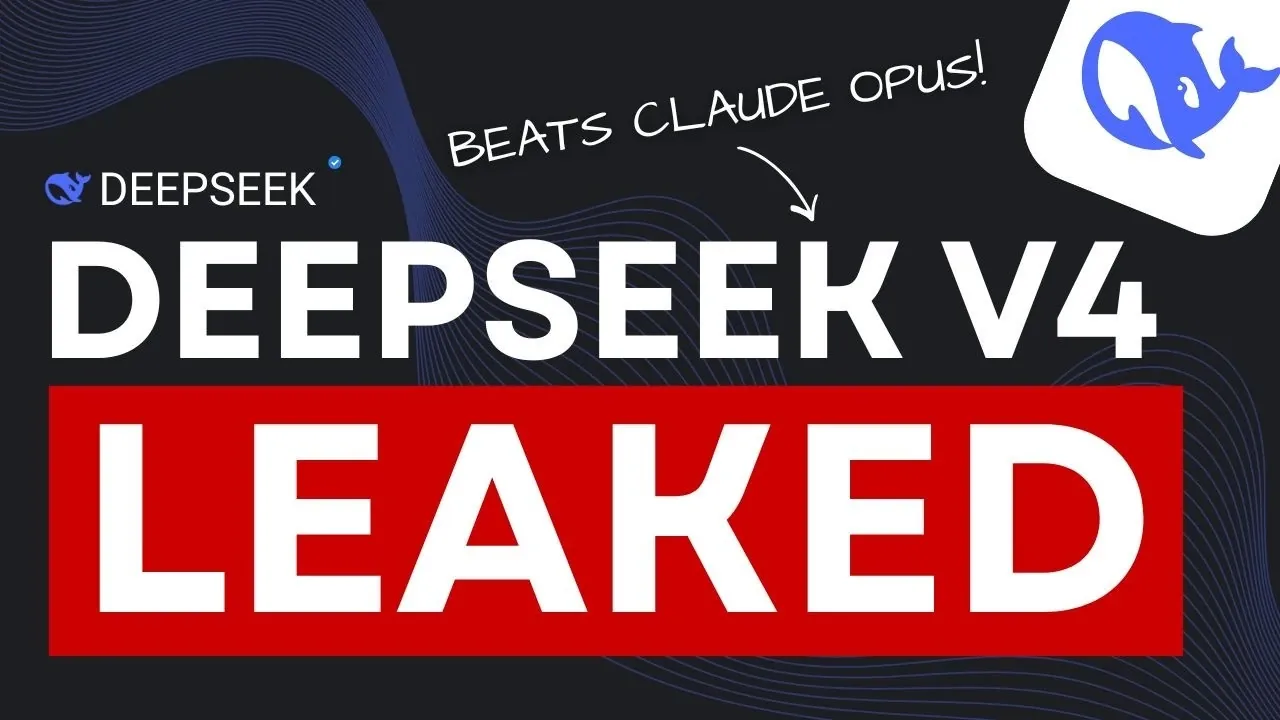
Leaked benchmarks for DeepSeek V4 have sparked significant discussion, revealing a model that reportedly scales between 200 billion and 1 trillion parameters. According to the leaks, its novel MHC (Multi-Hierarchical Context) architecture enables multimodal processing of text, images and video, with a token context window of 1 million tokens for handling expansive inputs. Universe of AI examines these claims alongside Enthropic’s updates to Claude Code, which now includes enhanced “computer use” capabilities for managing applications and systems directly through AI. These developments highlight both the potential and the challenges of scaling advanced AI systems.
Explore specific insights into how Enthropic’s Claude Code balances functionality with safety, including session-based controls and app-specific permissions designed to mitigate risks. You’ll also gain a closer look at OpenAI’s Codex plugin integration, which fosters cross-platform collaboration by bridging Claude Code workflows with OpenAI’s systems. This disclosure provides a detailed breakdown of these advancements, offering a practical lens on their implications for developers and researchers navigating the rapidly evolving AI landscape.
DeepSeek V4: Ambitious Benchmarks & Uncertainty
TL;DR Key Takeaways :
- Leaked benchmarks for DeepSeek V4 reveal new multimodal capabilities, scaling up to 1 trillion parameters with a 1 million token context window, but concerns about transparency and readiness persist.
- DeepSeek faced scrutiny over a potential model swap during a seven-hour outage, highlighting the need for clear communication and accountability in AI development.
- Enthropic’s Claude Code updates enhance developer efficiency with advanced functionality and robust safety measures, including app-specific permissions and session-based controls.
- Microsoft’s multimodal research introduces innovative features like critique and council systems, improving collaboration and reliability in enterprise AI solutions.
- OpenAI’s Codex plugin integration fosters cross-platform collaboration, allowing seamless interoperability between AI tools and enhancing productivity in complex coding projects.
Leaked benchmarks for DeepSeek V4 suggest it could set new standards for AI performance. The model reportedly scales between 200 billion and 1 trillion parameters, using a novel MHC (Multi-Hierarchical Context) architecture. Its multimodal capabilities enable it to process text, images and video seamlessly, while a token context window of 1 million tokens allows it to handle highly intricate and expansive inputs.
According to the leaks, DeepSeek V4 achieves an impressive 90% accuracy in human evaluations and 80% in software benchmarks, potentially outperforming leading models like Claude Opus and GPT 5.3. However, these claims remain speculative, as DeepSeek has not officially confirmed the details. Adding to the uncertainty, reports indicate delays in the model’s release, raising questions about its readiness for deployment and the challenges of scaling such a complex system.
The speculation surrounding DeepSeek V4 underscores the growing demand for transparency in AI development. Without official confirmation or detailed documentation, users and researchers are left to interpret incomplete information, which can hinder trust and adoption.
DeepSeek Model Swap Controversy
DeepSeek recently faced scrutiny following a seven-hour outage, after which users reported a noticeable decline in SVG generation quality. This has fueled speculation about a potential model swap during the downtime. The absence of an official statement from DeepSeek has only deepened concerns about the transparency and consistency of its updates.
Such incidents highlight the importance of clear communication and accountability in AI development. As AI systems become more integrated into critical workflows, making sure reliability and maintaining user trust will be essential for their long-term success.
Here is a selection of other guides from our extensive library of content you may find of interest on DeepSeek.
- DeepSeek V4 Lite Leak Points to Fast, Clean SVG Code
- DeepSeek V4 Adds Native Multimodal Input and 1M Token Context Window
- The Next Era of AI: ChatGPT 5.5 & DeepSeek’s Massive Model
- DeepSeek V4 Leak Hints at Faster Long-Code Performance Gains
- Minimax 2.5 Preview: Stronger Tools for Front-End Work & Research
- DeepSeek V4 Leak Signals 2 Stealth Models on OpenRouter
- DeepSeek Self-Improving AI Agents: Memory, Reasoning & Benchmark Gaps
- AI News : DeepSeek V4 Aims at Long Code & February Launch
- DeepSeek Engram Splits Recall from Reasoning for Faster LLMs
- Gemini 3.5 Leak Details, Early Tests Show Mixed Performance
Enthropic’s Claude Code: Balancing Functionality and Safety
Enthropic has introduced significant updates to its Claude Code platform, focusing on enhanced “computer use” functionality. This feature allows you to directly control applications and systems through the AI, streamlining tasks such as compiling, testing and debugging code, all within a unified interface. These updates aim to make Claude Code a more powerful tool for developers, allowing greater efficiency in managing complex projects.
To address safety concerns, Enthropic has implemented robust safeguards:
- App-specific permissions to restrict access to sensitive functions.
- Session-based controls to manage and monitor interactions effectively.
- Exclusion of terminal screenshots to protect confidential information.
Additionally, a new auto mode for cloud code automates routine approvals while maintaining strict oversight for high-risk actions. By prioritizing both functionality and security, Enthropic aims to provide developers with a versatile and reliable platform that minimizes risks associated with AI-driven automation.
Microsoft’s Multimodal Research: Enhancing Collaboration
Microsoft is pushing the boundaries of AI research with innovative multimodal systems designed to improve collaboration and accuracy. One notable feature is the “critique” system in Microsoft 360 Pilot, which employs separate models for generating and reviewing outputs. This dual-model approach enhances reliability by identifying and addressing potential errors in real time.
Another advancement is the “council” feature, which synthesizes outputs from multiple AI models, including those from Enthropic and OpenAI. By comparing agreements and disagreements between models, the system provides a more comprehensive analysis, allowing users to make better-informed decisions.
These features are being rolled out to enterprise users through Microsoft’s Frontier program, reflecting the company’s commitment to advancing AI collaboration. By integrating multiple perspectives, Microsoft aims to deliver more robust and reliable AI-driven solutions that cater to diverse business needs.
OpenAI’s Codex Plugin: Fostering Cross-Platform Collaboration
OpenAI has taken a significant step toward cross-platform collaboration by integrating its Codex plugin into Claude Code workflows. This integration introduces advanced review modes, such as adversarial review and task handoff, allowing you to evaluate and refine outputs with greater precision. These features are particularly valuable for managing complex coding projects, where accuracy and efficiency are paramount.
The Codex plugin also enhances the functionality of AI-driven coding environments by bridging the gap between major AI platforms. By allowing seamless collaboration between tools like Claude Code and OpenAI’s systems, the plugin exemplifies the potential for interoperability in the AI ecosystem. This integration not only improves productivity but also sets a precedent for future collaborative innovations in AI development.
A Rapidly Evolving AI Landscape
The latest advancements in AI reflect the field’s rapid evolution and growing interconnectedness. From DeepSeek V4’s ambitious benchmarks to Enthropic’s safety-focused updates, Microsoft’s collaborative critique systems and OpenAI’s Codex plugin integration, these developments highlight the diverse approaches being taken to enhance AI capabilities. As these technologies continue to mature, they promise to reshape industries, redefine workflows and transform how humans interact with machines. However, the challenges of transparency, reliability and ethical considerations remain critical as AI systems become increasingly integral to modern life.
Media Credit: Universe of AI
Disclosure: Some of our articles include affiliate links. If you buy something through one of these links, Geeky Gadgets may earn an affiliate commission. Learn about our Disclosure Policy.






 English (US) ·
