

 Suhail Ahmed
Somewhere behind your eyes, in a space smaller than a shoebox, sits a living network with an estimated storage capacity of 2.5 petabytes. That sounds like science fiction, yet neuroscientists are steadily uncovering just how absurdly efficient the human brain is at packing, compressing, and reshaping information. At a time when cloud storage farms sprawl across deserts and drink electricity by the gigawatt, your brain quietly runs on the energy of a dim light bulb and a sandwich. The deeper researchers dig into synapses, memory networks, and neural codes, the more one unsettling idea emerges: we have massively underestimated what the human mind can hold. And that realization is starting to transform how we see learning, mental health, and even the future of computing itself.
The Hidden Clues Inside a Single Synapse
 The Hidden Clues Inside a Single Synapse (Image Credits: Wikimedia)
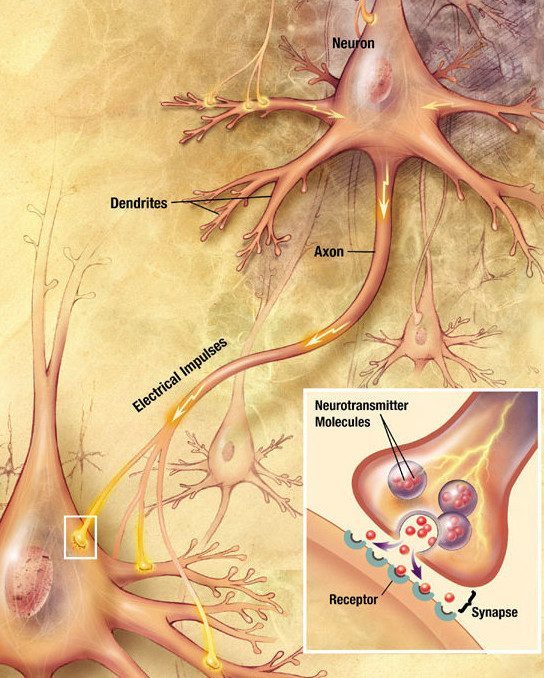
The first big shock came when scientists began to look more closely at synapses, the tiny junctions where neurons talk to one another. For years, they were often described in simple, almost cartoonish terms: an on–off switch, like a digital bit. But closer measurements suggested something far richer, almost like discovering that each “switch” is actually a dimmer with dozens of precise settings. In research analyzing synapses from the hippocampus of rats, scientists estimated that a single connection might store on the order of a few bits of information, not just one, due to the fine-grained variability in synaptic strength. That might sound small, but when you multiply it across hundreds of trillions of synapses, the numbers balloon into something staggering.
Some modeling studies have suggested that human memory capacity, when you add up all those synaptic states, could fall somewhere in the range of many petabytes – rivaling or even surpassing large data centers. That estimate is hotly debated, but what matters is the direction of the evidence: every few years, our best guess about brain storage seems to jump upward rather than shrink. The real magic is that this storage is not raw, uncompressed data the way your phone saves photos; it is deeply organized knowledge that can generalize, improvise, and combine. The brain does not just remember a face; it remembers the feeling, the context, the story tied to it. If the internet is a library, your memory is more like a living city, where every street can reorganize itself overnight.
From Ancient Skulls to Modern Brain Maps
 From Ancient Skulls to Modern Brain Maps (Image Credits: Wikimedia)
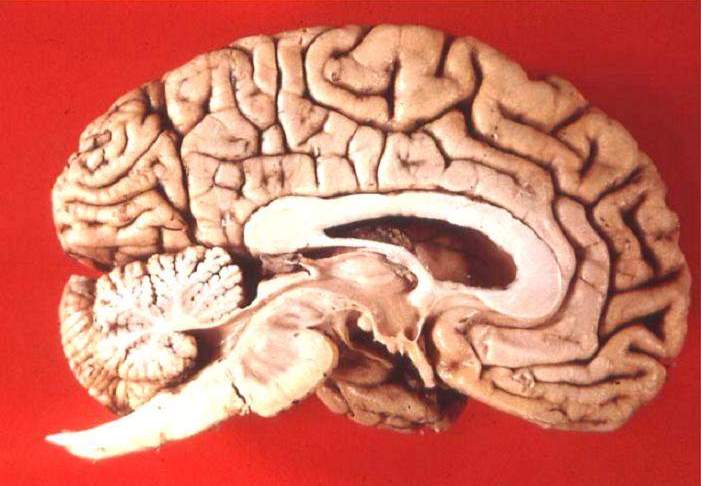
Humans have been poking at skulls and speculating about the mind for thousands of years, but only in the last century have we started to quantify what this three-pound organ can actually do. Early anatomists could weigh brains and count rough neuron numbers, noticing that humans have an unusually dense cortex compared with most other mammals. Later, with electron microscopes and better staining methods, neuroscientists could zoom in to see actual synapses, the branching trees of dendrites, and the mind-boggling wiring density in even a grain-of-rice-sized chunk of tissue. The emerging picture was not just complexity, but extreme efficiency: very short wiring distances, re-used pathways, and incredibly clever layouts that minimize energy and space.
In the last two decades, brain mapping projects have pushed this further, building connectomes that attempt to chart entire circuits. Each map, even when it covers only a tiny slice of brain, explodes into billions of data points – so much that supercomputers struggle to keep up. It is a strange reversal: our most powerful machines strain to simulate just a few milliseconds of what your actual brain does without breaking a sweat. Looking back from here, the old view of memory as a neat row of “files” stored somewhere in the head feels almost naive. The modern view sees memory capacity emerging from a tangled, dynamic web that is constantly updating, pruning, and rewiring, moment by moment.
Beyond Megabytes: How the Brain Compresses a Lifetime
 Beyond Megabytes: How the Brain Compresses a Lifetime (Image Credits: Wikimedia)
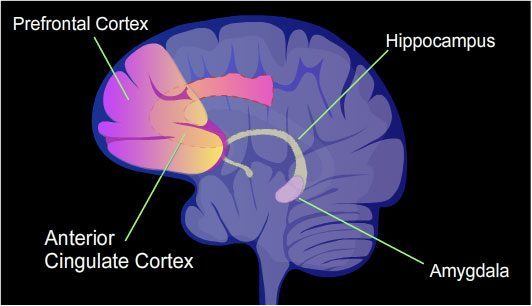
Even if you never learn another fact from this day forward, your brain is already holding an extraordinary library of experiences. You have a mental map of every home you have lived in, the faces of hundreds or thousands of people, textures of childhood toys, the rules of your language, the feel of riding a bike. If you tried to store all of that in raw form, frame by frame like uncompressed video, you would run out of disk space very quickly. But biologically, the brain cheats. It does something closer to what cutting-edge compression algorithms do: it extracts patterns, discards redundancy, and stores only what really matters for future predictions.
Researchers see this in memory experiments where people remember the gist of a story far better than specific details, or where they misremember information in a way that fits their prior beliefs and schemas. That is not a bug, it is a feature of a system optimized to make fast decisions rather than perfect archives. In practice, this means your brain might store a lifetime of experiences using a tiny fraction of the raw space that a machine would need. It also explains why you can, in an instant, conjure up a vivid childhood scene that you have not thought about in years, like opening a compressed file that suddenly blossoms into full color. The real trick is not just how much we store, but how effortlessly we reassemble meaning from what is stored.
Why It Matters: Rethinking Your Own Potential
 Why It Matters: Rethinking Your Own Potential (Image Credits: Wikimedia)
All this talk of petabytes and synapses might feel abstract, but it lands somewhere very personal: it challenges the quiet story many of us tell ourselves that our minds are fixed, limited, or already “full.” When you realize the physical system in your head may be capable of storing more structured information than sprawling global networks, the idea of being “too old to learn” starts to look flimsy. Yes, attention is limited, and yes, we forget plenty – but that is usually a problem of focus, emotion, and relevance, not a hard storage ceiling. In learning research, adults who believe their abilities are still plastic often outperform those who see intelligence as frozen, even when starting from the same baseline.
Thinking of the brain as a vast, underused archive can change how you approach skills, habits, even relationships. Instead of assuming your memory is fragile, you can treat it like a powerful search engine that just needs better indexing through repetition, sleep, and meaningful connections. Compared with external drives or cloud accounts, your internal storage is also private, embodied, and deeply tied to your sense of self. That makes it both precious and vulnerable. When we ignore this, we risk outsourcing more and more of our lives to devices, while the strongest adaptive hardware we own sits idling.
How the Brain Excels Over Digital Storage in Efficiency
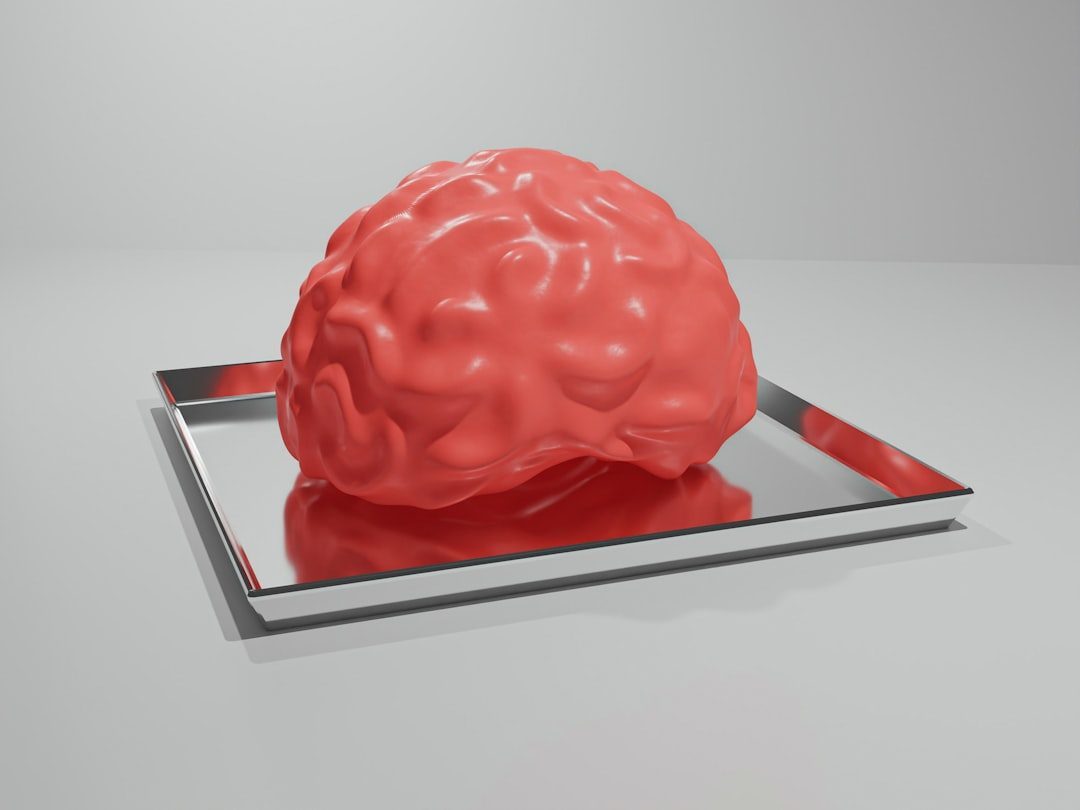 How the Brain Excels Over Digital Storage in Efficiency (Image Credits: Unsplash)
It is tempting to turn this into a comparison: brain versus digital storage in raw capacity? But the more interesting story is how differently they handle information. The internet is mostly literal; it stores copies of files, packets of text and image data, scattered across servers that must be carefully cooled and powered. When you search online, you pull up existing items. By contrast, the brain is generative. When you remember, you are reconstructing, blending fragments of many experiences into something new and slightly altered each time. That flexibility is one reason creativity still feels so hard to automate.
From an energy perspective, the brain also embarrasses our machines. Vast data centers consume enormous electrical power to move information around, while your brain uses about as much energy as a low-wattage lamp. It handles perception, movement, planning, emotion, and memory all at once without melting down. That is why some computer scientists now look to neuroscience for inspiration, trying to build neuromorphic chips that mimic the way neurons and synapses work. Next time you scroll through a massive online archive, it is worth remembering that the system doing the scrolling is, in many ways, more efficient than the archive itself.
The Future Landscape: Brain-Inspired Machines and Mind Upgrades
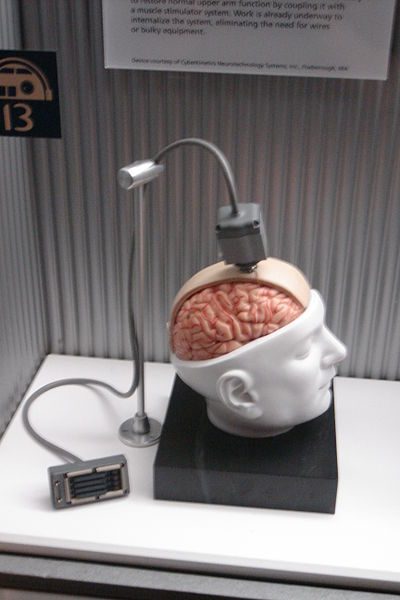 The Future Landscape: Brain-Inspired Machines and Mind Upgrades (Image Credits: Wikimedia)
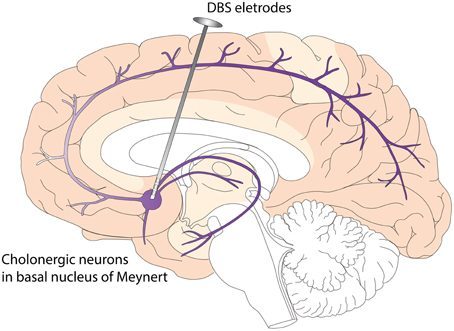
As we move deeper into the middle of the twenty-first century, the line between biological and digital storage is starting to blur. Brain–computer interfaces are no longer pure fiction; early devices already help some people with paralysis move robotic arms or type using neural signals. Although we are still far from “uploading” a mind, the very idea that the brain’s information could, someday, be read and translated in richer detail is pushing engineers to rethink how memory might be backed up or extended. At the same time, the more we learn about the density and efficiency of brain storage, the more obvious it becomes that copying it wholesale is a far bigger challenge than early optimists imagined.
One likely future is not a direct brain-to-cloud transfer, but a tighter partnership: hardware that augments specific weaknesses, like precise numerical recall, while letting our biological memory systems handle meaning, emotion, and big-picture understanding. This hybrid approach could show up in education, therapy, even creative work, with tools that adapt to your personal memory profile in real time. On the research side, mapping brain microcircuits will require storage and processing capacities that themselves approach the scale of the systems they study, creating a strange mirror effect. The question is less whether the human brain can beat the internet on raw capacity, and more how we use that capacity wisely as our external tools explode in power.
Everyday Superpowers: Simple Ways to Tap More of Your Brain’s Storage
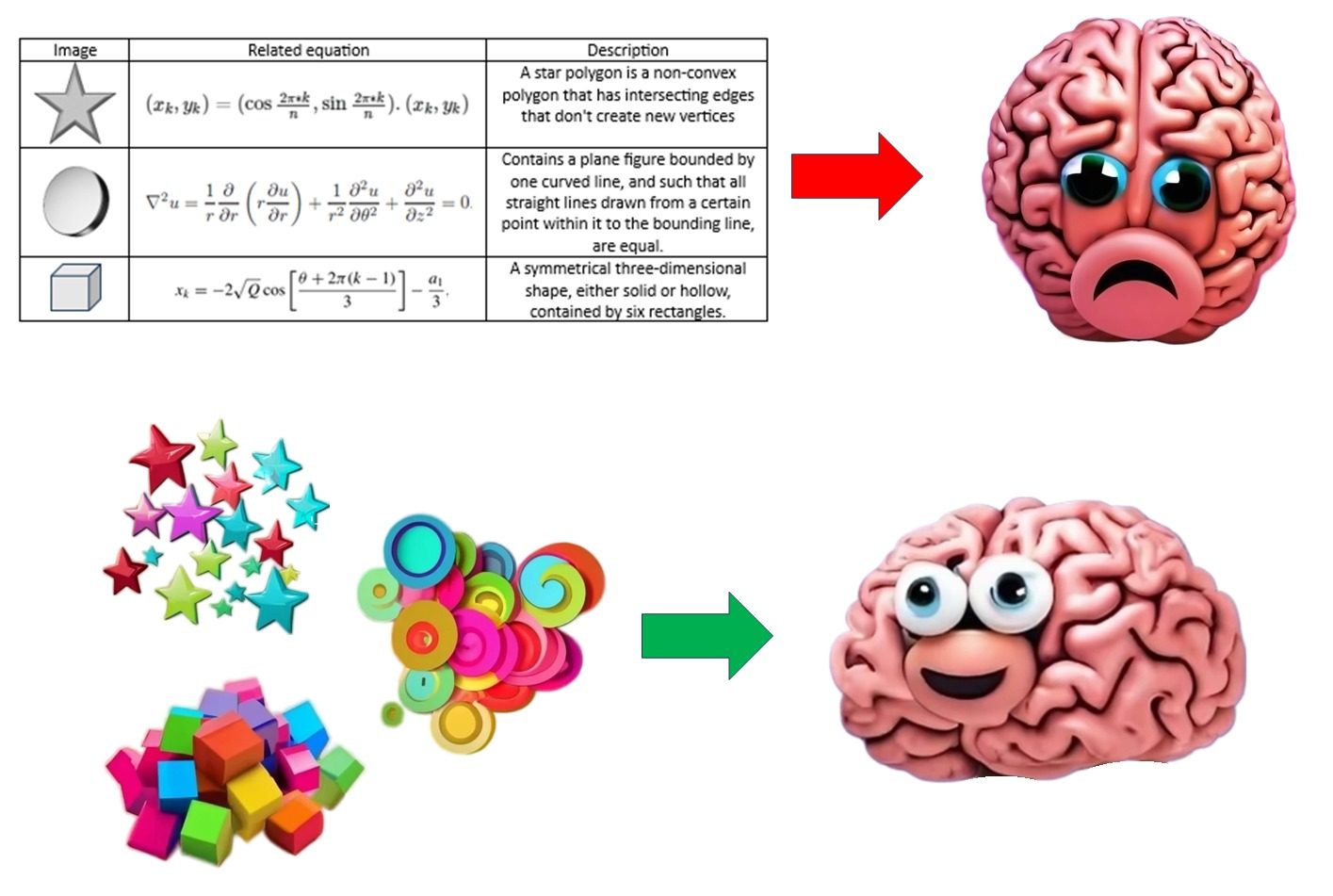 Everyday Superpowers: Simple Ways to Tap More of Your Brain’s Storage (Image Credits: Wikimedia)
The idea that your brain might quietly rival the internet is thrilling, but it is only useful if it changes how you actually live. In my own life, the shift came when I stopped treating my memory as a fragile cup that overflows and started treating it like a muscle that responds to training. Simple practices had outsized effects: deliberately recalling what I had learned at the end of the day, writing short summaries from memory, or spacing out review of important information over days instead of cramming. Sleep helped too; on weeks when I protected my nights, I could feel old fragments of ideas clicking into place more easily.
You do not need a lab to start exploring your own mental capacity. You might try: – Picking one new skill this year that feels slightly intimidating and committing to steady, small steps. – Turning off “quick look-up” habits for certain tasks and relying on recall first before checking a device. – Using stories, images, or personal connections whenever you learn a fact, so it sticks in a richer network. Over time, these choices act like better indexing for that vast neural archive. Your brain is already astonishing hardware; the real experiment now is how bravely you choose to use it.
Suhail Ahmed is a passionate digital professional and nature enthusiast with over 8 years of experience in content strategy, SEO, web development, and digital operations. Alongside his freelance journey, Suhail actively contributes to nature and wildlife platforms like Discover Wildlife, where he channels his curiosity for the planet into engaging, educational storytelling.
With a strong background in managing digital ecosystems — from ecommerce stores and WordPress websites to social media and automation — Suhail merges technical precision with creative insight. His content reflects a rare balance: SEO-friendly yet deeply human, data-informed yet emotionally resonant.
Driven by a love for discovery and storytelling, Suhail believes in using digital platforms to amplify causes that matter — especially those protecting Earth’s biodiversity and inspiring sustainable living. Whether he’s managing online projects or crafting wildlife content, his goal remains the same: to inform, inspire, and leave a positive digital footprint.


 English (US) ·
