


You open a hotel booking site from the U.S., click the same dates your friend in France clicks, and somehow your “same room” costs meaningfully more.
This is not paranoia. It is also not always a scam.
It’s a stack of small, boring mechanisms that compound, and Americans tend to hit the worst combination: different market rates, different currency presentation, different default fees, and a browser that is already tagged with “high willingness to pay.”
The fix is not a secret handshake. It’s a clean comparison workflow that takes five minutes and stops you from paying the “default price.”
What’s actually happening when the same room shows two prices

Hotel pricing is not one number. It’s a menu of rates filtered by who you appear to be.
Three drivers matter most:
- Country-based rates
Many major platforms support country targeting, meaning a property can set different discounts for travelers from specific markets. That is not speculation, it’s openly described in platform documentation as country rates and country-based pricing. - Personalisation and segmentation
Travel pricing is increasingly shaped by segmentation signals: your location, language, device type, past behavior, and sometimes whether you look like a “planner” or a “panic buyer.” The broader trend is well-covered as personalised pricing in travel. - Currency and fee presentation
Americans often see prices in USD, sometimes with a platform conversion service layered in. That can quietly add margin, and it can also hide that the underlying price was set in euros and simply looks bigger when converted at an unfavorable rate. Booking platforms explicitly describe “pay in your own currency” style services and the fact that conversion can vary.
Then the kicker: Europe is generally stricter about showing the total price with taxes and mandatory fees included, while U.S.-facing experiences often default to “from” pricing until late in checkout. Booking platforms even call out EU consumer-law price presentation requirements.
So when people say “Americans pay 40% more,” what they usually mean is: a mix of market-targeted rates plus conversion margin plus worse defaults plus less transparency early. It is not always 40%, but 10% to 40% gaps are easy to create when multiple layers line up.
The browser trick: the five-minute two-tab test

If you want one habit that reliably reduces overpaying, it’s this: run a clean comparison before you commit.
Here’s the workflow I use in Spain when we’re booking weekends and family trips and the numbers feel off. It’s not glamorous, it’s repeatable.
Step 1: Open a clean session
Use a private window, or better, a separate browser profile with no extensions and no logged-in accounts. The point is no stored cookies and no “this is a returning buyer” signals.
Step 2: Pick one property and lock the variables
Same hotel, same room type, same dates, same cancellation rules. If you compare a refundable rate to a non-refundable rate, you will fool yourself.
Step 3: Duplicate the page into a second tab and change only the market cues
In the second tab, change:
- Country or market setting (if the site offers it)
- Language (switch to the destination language if possible)
- Currency to EUR or the hotel’s local currency
Do not stop at “it looks cheaper.” Click through until you see the total, including taxes and fees.
Step 4: Screenshot the totals
You want a clean record of:
- total for the stay
- what is included (breakfast, taxes, city tax)
- cancellation rules
- payment timing
Step 5: Run one additional check
Check either:
- the hotel’s direct site, or
- a second major platform, or
- a metasearch result
This matters because a platform may be applying a country rate that another channel is not, and some hotels now have more freedom to offer differentiated pricing across channels than they did in the strict parity era.
That’s the trick. Not a magic loophole, just controlled comparison.
The quiet 3% to 10% overpayment most Americans don’t notice

Even when the base room rate is identical, Americans can still overpay at checkout.
The main culprit is currency conversion choices, especially when you’re offered the convenience of paying in your home currency.
If a platform offers “pay in USD” for a euro-priced hotel, you are effectively accepting their exchange spread and sometimes an embedded service margin. Booking sites describe currency conversion as informational and note that actual rates can vary, and some have explicit “pay in your own currency” terms.
The fix is blunt: pay in the hotel’s local currency whenever you can, and let your card network handle conversion.
If you want the clean mental model, Wise and other consumer finance sources explain it plainly: choosing local currency bypasses the inflated exchange rate you often get through conversion services.
A real-world example with normal numbers:
- Room rate: €150/night
- 4 nights: €600
- Platform offers “Pay in USD”: shows $680
- Your card network conversion at purchase date might have landed closer to $650
- That “small” difference is $30 for doing nothing wrong
Now layer in a destination where you’re booking multiple rooms or a two-week trip, and you can burn $150 to $400 just on conversion presentation.
This is why the two-tab test always includes switching to EUR. It forces you to compare the underlying rate, not the glossy converted one.
Your account, your device, and your timing are pricing inputs
Americans love to blame cookies. Cookies are part of it, but the bigger issue is that your session can carry a “buyer profile.”
Three signals matter more than people admit:
1) Logged-in status
When you’re logged in, you may see member-only rates, but you may also be bucketed into a segment that is more predictable, and predictable buyers get tested. You want to compare both: logged-in and logged-out.
The useful move is price checking logged-out, then booking with the best combination of rate and protections.
2) Device and app rates
Some platforms provide app-only rates or mobile-only promotions. That is not conspiracy, it’s basic channel strategy.
So your comparison stack should include:
- one desktop check
- one mobile browser check
- optionally the app check
You are not doing this forever. You’re doing it when the numbers feel wrong.
3) Timing and “panic behavior”
If you search the same property ten times, you don’t necessarily trigger a price increase because “the site saw you.” More often, you’re watching inventory move, especially in popular cities.
But repeated searches can still hurt you because you start making decisions like a panicked buyer, and panicked buyers click the expensive flexible rate “just in case.”
The practical rule is: do your price comparison early in the week, then book when you see a rate you’d be happy paying. Don’t turn booking into a nightly dopamine loop.
Taxes and fees: Europeans often compare a different number
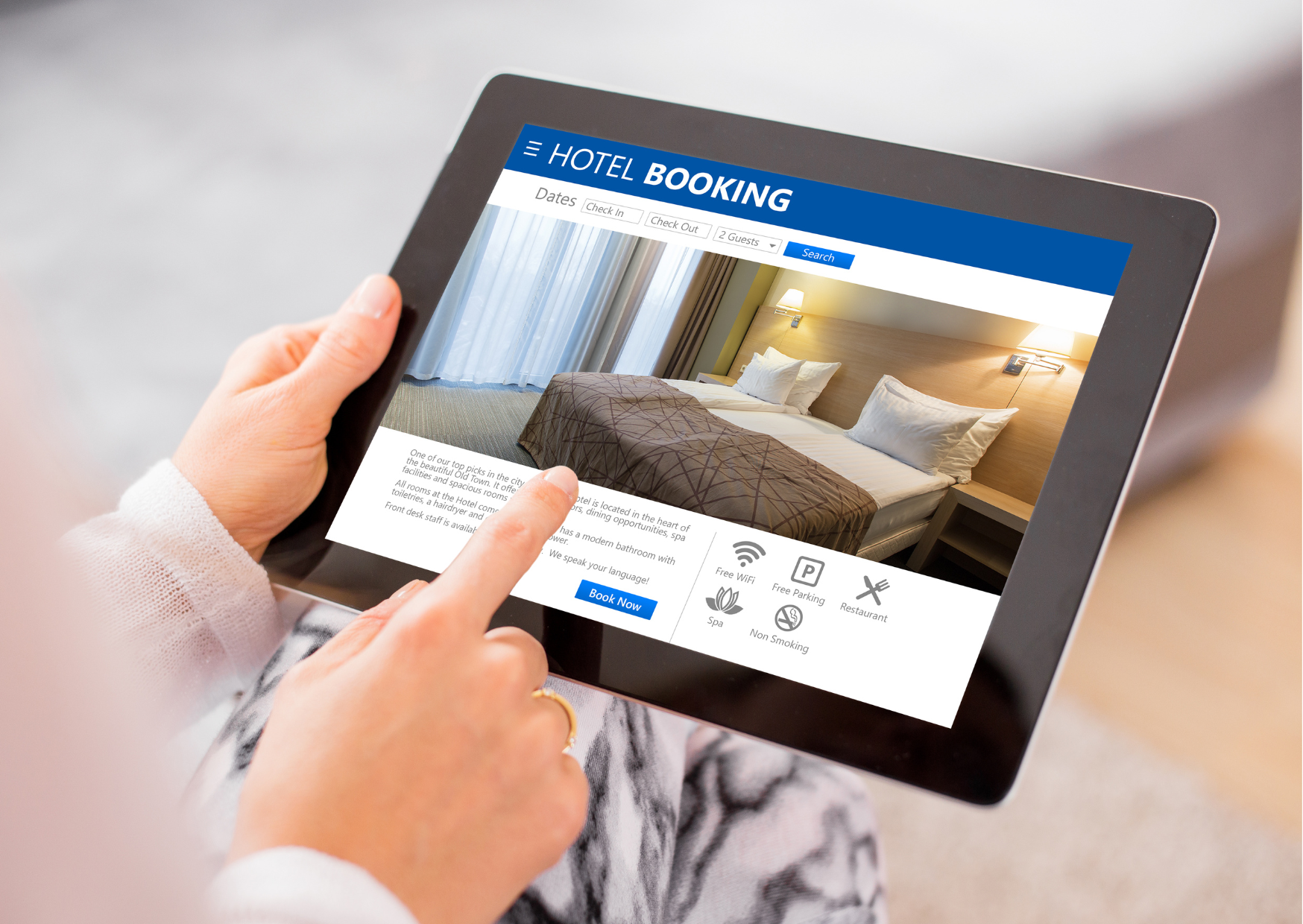
A lot of “Americans pay more” screenshots are comparing apples to the wrong apple.
Europe pushes harder on total-price transparency. Some platforms explicitly note EU consumer-law obligations that prices reflect the total amount guests will pay for their stay.
Meanwhile, American users sometimes see:
- a nightly rate without taxes included upfront
- resort fees revealed late
- currency conversion added at payment
- city tax described as “pay at property” and omitted from totals
So part of the fix is learning which total you are comparing.
When you do the two-tab test, compare:
- total cost for the stay
- taxes included versus excluded
- property-collected charges (city tax, tourist tax)
If you want a clean way to avoid self-deception, build a tiny checklist in your notes app and use it every time:
- Same dates
- Same room type
- Same cancellation rules
- Same meal inclusion
- Same payment timing
- Same total, including taxes
That’s how you avoid being outraged by a “higher price” that was simply a more complete price.
When the hotel’s direct site beats the platforms
There’s a myth that the big platforms always win.
In Spain, I see the opposite often enough to bother checking: direct sites can be cheaper, or they can bundle value that makes the net cheaper.
Why?
- Hotels can offer perks to direct bookers, like breakfast or late checkout.
- Some platforms used price parity clauses that limited undercutting, but the EU legal landscape has shifted, and hotels have been increasingly aggressive about steering direct business.
- Hotels can also run member programs that are not mirrored on OTAs.
The rule is not “always book direct.” The rule is: check direct when the OTA price feels inflated.
Here’s the reality-based approach:
- If the OTA is cheaper by €10 to €20/night, and cancellation terms are good, take the OTA.
- If direct is within €5 to €10/night, direct often wins because service issues are easier to resolve with the property.
- If direct includes breakfast for two, the math flips quickly in Europe because breakfast at a hotel can be €12 to €25 per person.
Also, don’t ignore boring rate types:
- “Pay at property” can be safer for currency conversion because your card handles FX at charge time.
- “Prepay now” can be fine, but only if you are happy with the cancellation policy and the currency choice is not a markup trap.
A weekly booking rhythm that stops the overpaying
If you want this to become effortless, treat it like a small habit.
Here’s the rhythm that works, and yes, timing beats willpower when you’re tired and trying to book at midnight.
Monday or Tuesday: price-check
Run the two-tab test for your top three hotels. Save screenshots. You now have a baseline.
Wednesday: cross-check
Check the hotel direct site for those same properties. If there’s a direct-only rate, capture it.
Thursday: decide
Book the option that is cheapest on a true total basis, with the cancellation rules you actually need. Not the rules you think you “might” need when you’re anxious.
This weekly rhythm does two things:
- It prevents you from paying the first price you see.
- It prevents you from turning booking into an emotional spiral.
If you have to book quickly, do the compressed version:
- 5 minutes, clean session, EUR currency, one direct-site check.
Even that is enough to catch the worst overpayment patterns.
What not to do, and the decision you’re actually making

A few lines that will save you trouble:
- Incognito does not hide your IP address. It mainly clears stored session signals.
- A VPN can be useful for price comparison, but don’t build your whole strategy around it. Country rates are real, but inventory and policy differences can outweigh any “cheap country” trick.
- Do not book a “cheaper” rate that has worse cancellation rules if you know you change plans. The cheapest room is the one you don’t have to forfeit.
Also, don’t confuse “different market” with “free money.” Sometimes the lower price is tied to:
- non-refundable rules
- no changes
- payment in a specific currency
- weaker customer protections for that booking channel
The point is not to game the system. The point is to stop being the easiest person to charge more.
So here’s the decision:
You can keep booking hotels like most Americans do, logged in, in USD, on a sticky browser, and accept whatever number shows up first.
Or you can run a five-minute comparison in a clean session, in EUR, with one direct-site check, and keep that extra 10% to 40% in your pocket for the part of the trip you actually care about.
That’s the whole game.

About the Author: Ruben, co-founder of Gamintraveler.com since 2014, is a seasoned traveler from Spain who has explored over 100 countries since 2009. Known for his extensive travel adventures across South America, Europe, the US, Australia, New Zealand, Asia, and Africa, Ruben combines his passion for adventurous yet sustainable living with his love for cycling, highlighted by his remarkable 5-month bicycle journey from Spain to Norway. He currently resides in Spain, where he continues sharing his travel experiences with his partner, Rachel, and their son, Han.
Disclaimer: This post may contain affiliate links. If you click on these links and make a purchase, we may earn a commission at no extra cost to you. Please note that we only recommend products and services that we have personally used or believe will add value to our readers. Your support through these links helps us to continue creating informative and engaging content. Thank you for your support!







 English (US) ·
